
Connecting Australia to The global space future
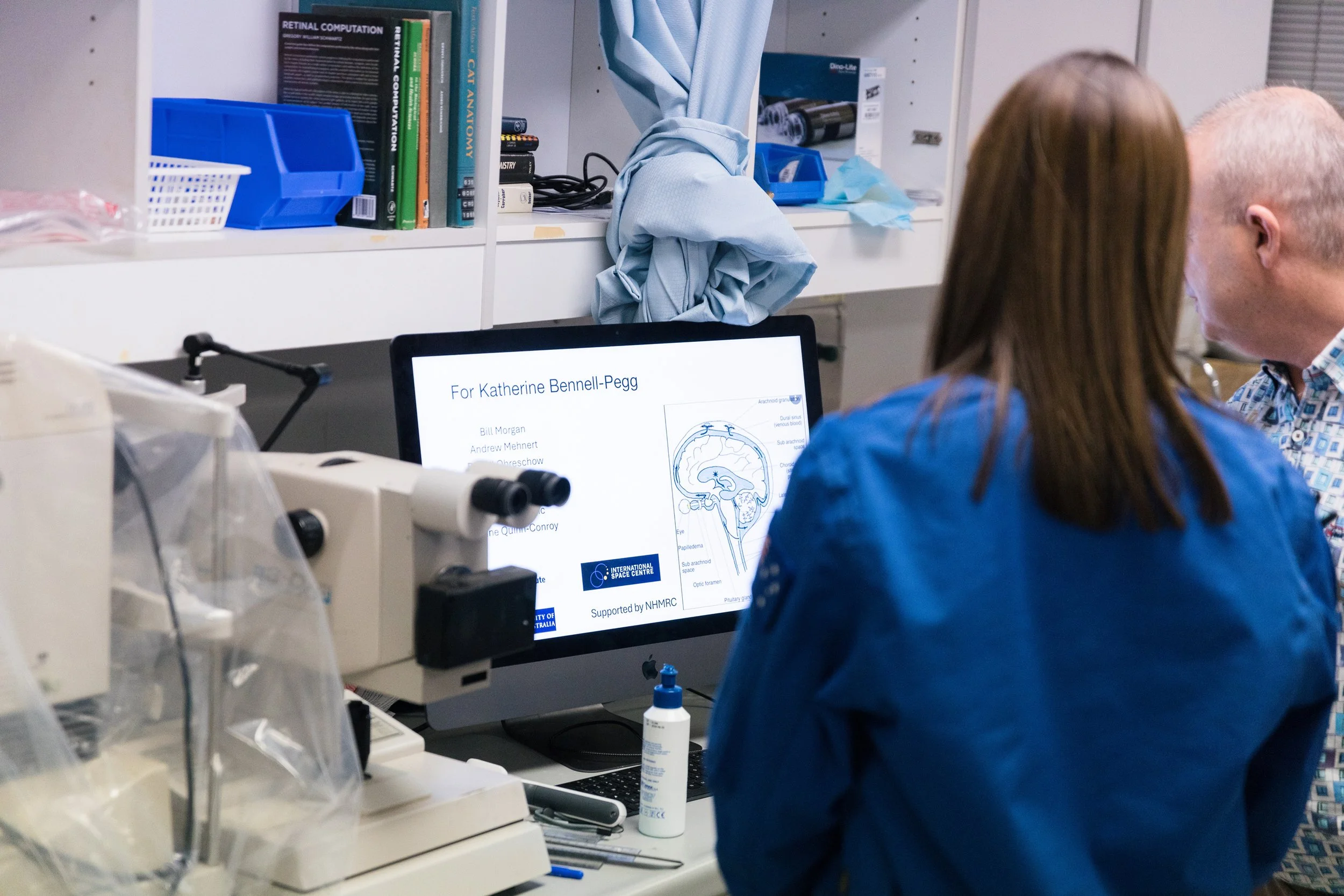
The European Space Agency has extended an invitation to the Australian Government for a spaceflight mission for Katherine Bennell-Pegg. This offer represents a once-in-a-generation chance for Australia’s space industry to formally connect with the global space sector, using the currently recognised mechanism for participation - an astronaut.
The Australian Government are currently seriously considering this offer. This campaign brings together national support, evidence and advocacy to support the Government with direct feedback from industry, academia and the STEM sectors.
The window for Australia to secure a human spaceflight mission that delivers all of these continuing benefits to our economy is extraordinarily narrow. The timing of the decision is critical. ESA member states are progressing mission allocations and contractual agreements over the coming months. If we miss this opportunity, it is likely to be decades before another arises.
Australia is one of the most space-dependent nations in the world, with satellite services underpinning banking, agriculture, logistics, telecommunications, disaster management and national security, and yet still remains in the early stages of developing sovereign space capability.
This opportunity is not about sending one individual into orbit. It is about anchoring Australia to the global space economy. Nations that participate in human spaceflight sit at the table where future space rules, supply chains and collaborations are shaped.
A proposed mission could represent a strategic investment designed to generate downstream economic return through international contracts, advanced manufacturing opportunities, research access and expanded market integration with Europe.
Supporting innovation, research and industry in Australia.
➔ Economic Returns
➔ Driving our Future STEM Workforce
➔ The story behind this campaign
➔ Frequently Asked Questions
➔ Statistics and Sources
➔ #flyKatherine in the Media
➔ Latest News
➔ Contact Us
26
countries have flown their own astronaut to the space station.
6
space agencies have sent ISS crew.
7th?
Australia can be next.
our Future
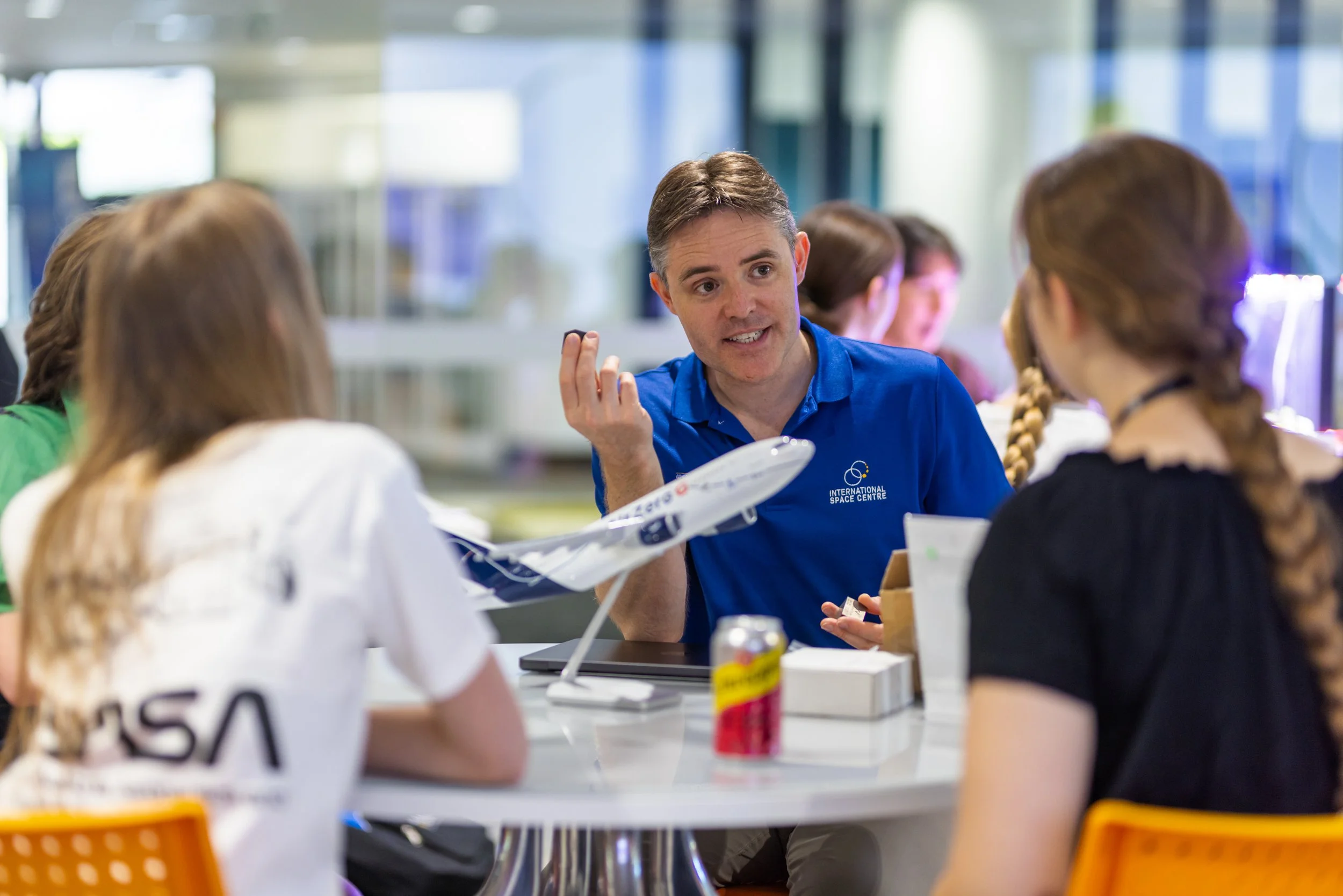
STEM Participation and our Future Workforce
In Australia, the number of STEM jobs grew by 85% from 2010 to 2020 and continue to grow at more than twice the rate of other jobs. And yet, the proportion of Australian Year 12 students enrolling in ATAR Mathematics subjects at intermediate or higher levels dropped from 30.6 % in 2019 to 25.2 % in 2023, signalling a critical decline in the STEM-education pipeline. A similar decline is reflected in ATAR Physics.
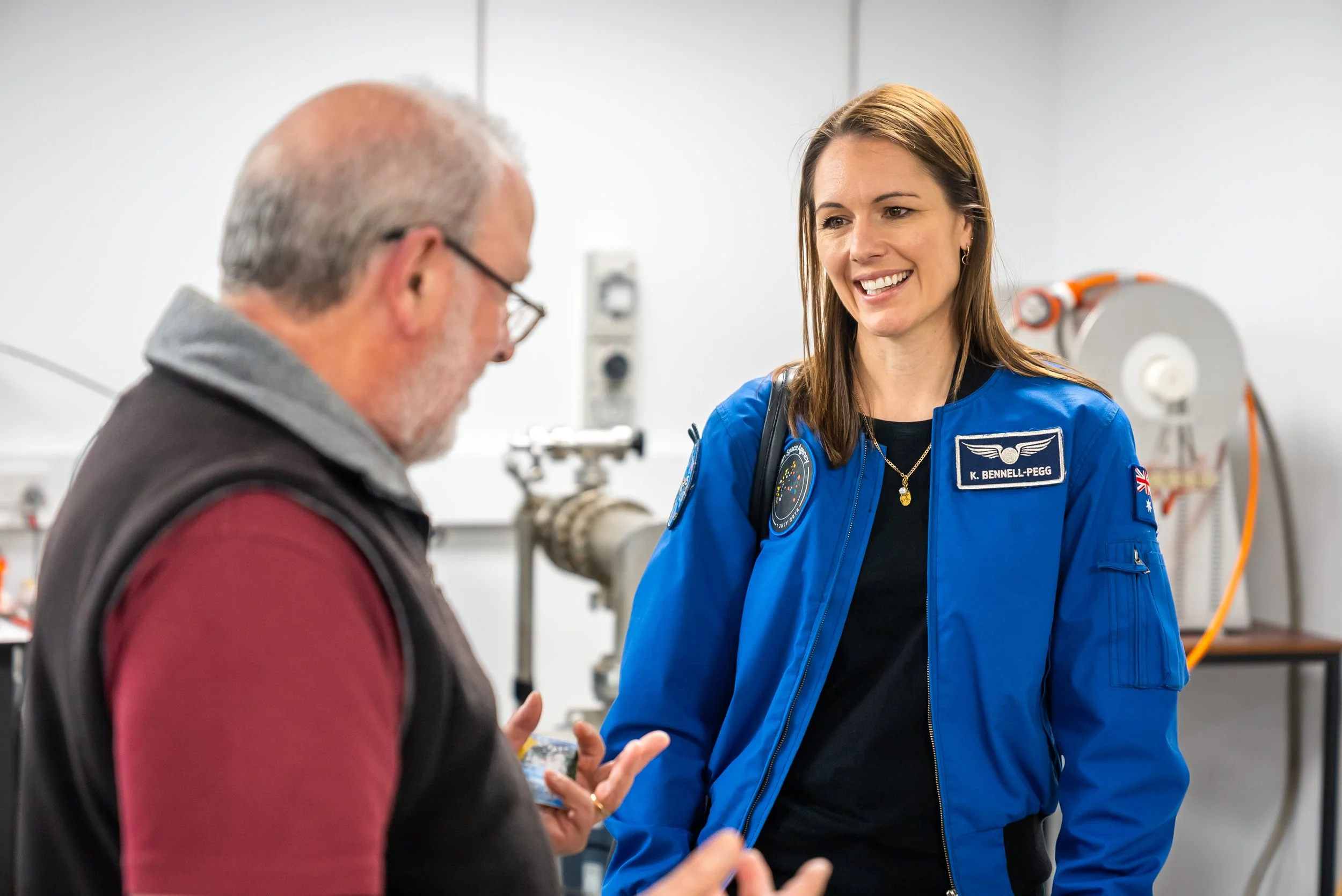
Economy, Innovation And R&D
Australia's economy ranks just 105 out of 145 countries for economic complexity. This leads to:
Over-reliance on commodities, making Australia susceptible to boom-bust cycles.
Limited knowledge building.
Less able to participate in complex sectors such as AI, quantum and space.
We are led, rather than leading.