STEM, Inspiration, and our Future Workforce.
The STEM Crisis
The Need
In Australia, STEM jobs grew by 85% from 2010 to 2020 and continue to grow at more than twice the rate of other jobs.
Jobs and Skills Australia (JSA) highlights that total employment in Australia is projected to grow by around 2 million jobs by May 2034. This growth is concentrated in higher-skilled fields (eg. ICT, engineering, “Professional, Scientific and Technical Services”). At the same time, their “Occupations in Shortage” statistics show persistent shortages for these areas. For example, for Technicians & Trade Workers around 33% of occupations in that major group are assessed as in persistent shortage.
Australia faces skills shortages in 36% of AUKUS occupations, including in 50% of technical and trade areas like construction.
And yet, participation rates in STEM are dropping at alarming rates.
The Scene
The proportion of Australian Year 12 students enrolling in mathematics subjects at intermediate or higher levels dropped from 30.6 % in 2019 to 25.2 % in 2023, signalling a decline in the STEM-education pipeline. A similar decline is reflected in ATAR physics - and at the same time, zero progress has been made in closing the gender gap in physics.
In Years 4 and 8 girls have fallen so far behind boys in both maths and science subjects that Australia's education gender gap is the worst among 58 countries tested.
Almost one-third of Australian children in Years 3, 5, 7 and 9 are failing to meet minimum numeracy requirements.
Supply is already failing to meet need. If demand rises and supply is weak or declining, then the shortage gap will widen over time. Please check our Statistics page for more trends and their sources.
The Opportunity
Shifting just 1% of Australia’s workforce into STEM roles is expected to add more than $57 billion to the Gross Domestic Product (net present value over 20 years).
Productivity: STEM workers generate higher output per hour. OECD and Productivity Commission studies show that every 1 % increase in STEM-qualified employment correlates with 0.3–0.5 % GDP growth.
Innovation & R&D intensity: Economies with higher STEM density produce more patents, start-ups, and R&D investment. Fewer STEM graduates mean fewer innovators per capita.
Sovereign capability & imports: A shrinking STEM base forces reliance on foreign technology and expertise, worsening the balance of trade in high-tech goods and defence systems.
The Solution
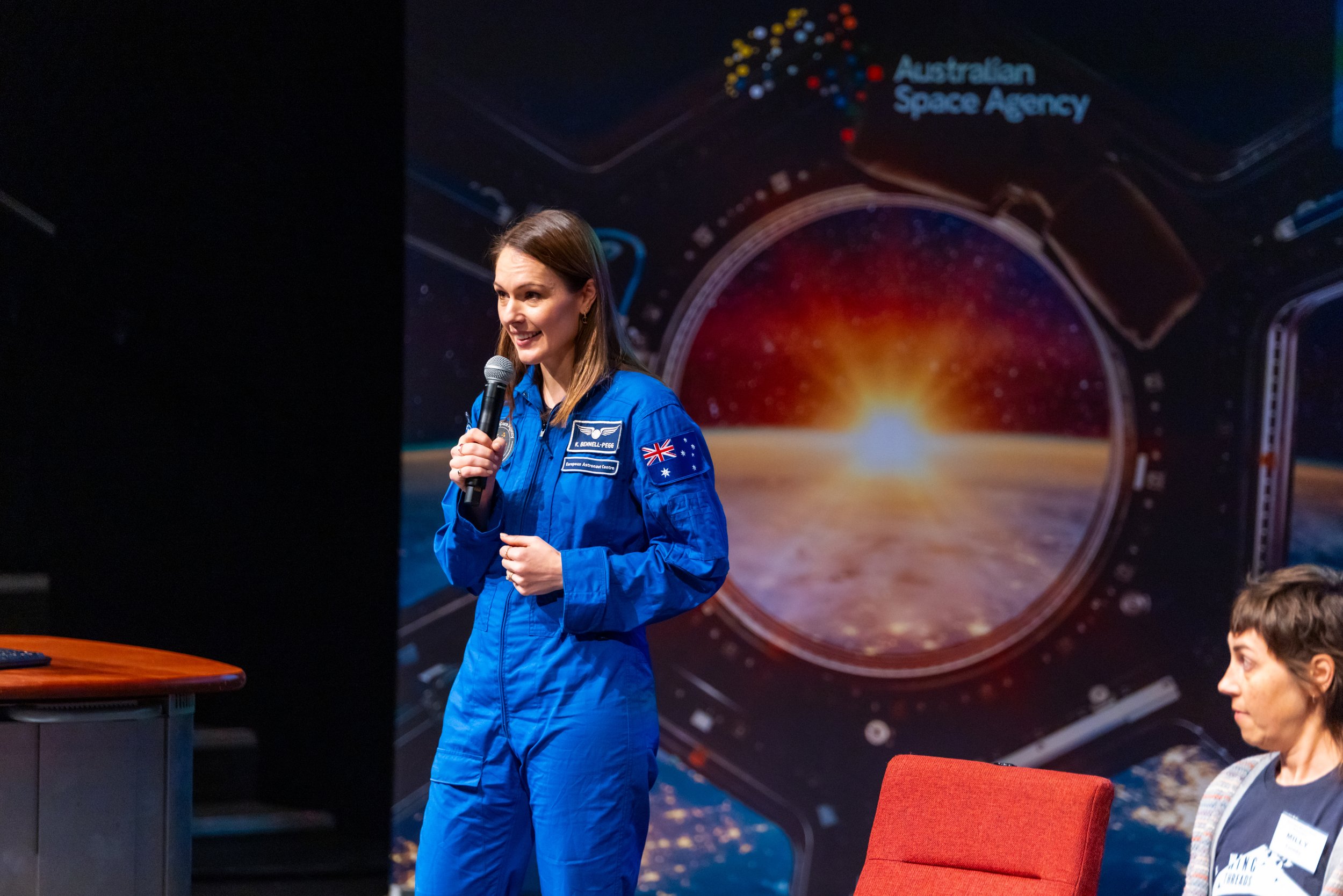
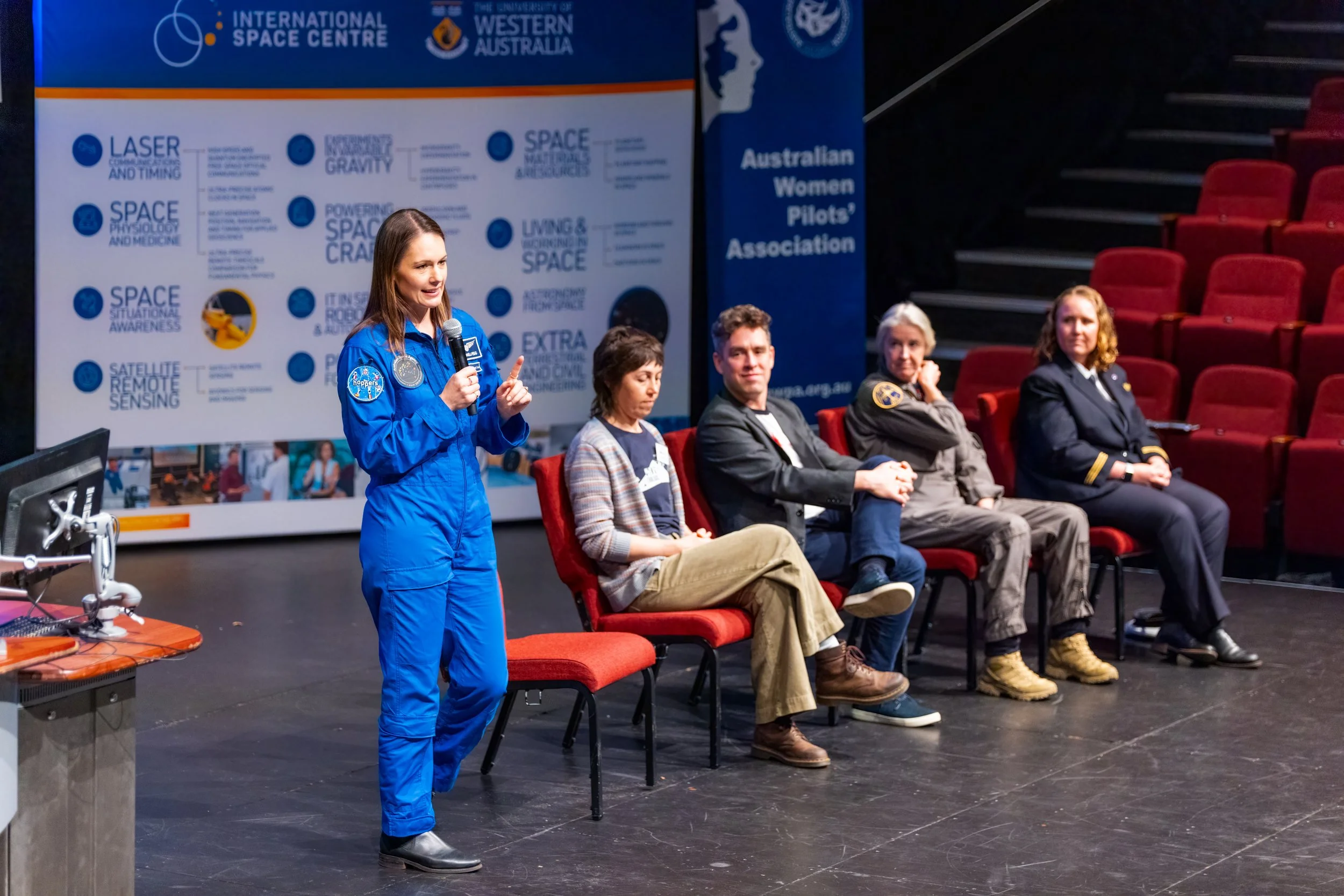
Katherine Bennell-Pegg represents a once-in-a-generation opportunity to reset Australia’s STEM trajectory.
Nations invest in what they value. In Australia, we understand the power of national ambition. In the 2024–25 Budget alone, the Australian Government committed:
$249.7 million to upgrade the Australian Institute of Sport
$132.7 million over three years for participation and high-performance programs
$216.3 million to support national sporting organisations
This is not questioned, because we know what it delivers: inspiration, participation, and national pride.
Human spaceflight delivers the same effect, but with a direct economic consequence.
An astronaut is not simply a symbol. They are a national focal point for aspiration, capable of shifting behaviour at scale. This means what students choose to study, what careers they pursue, and how a country sees its future.
We have seen this before. During the Apollo era (1960s–70s), engineering and physics enrolments in the United States doubled. That uplift was not accidental. It was driven by visibility, ambition, and a clear national mission that captured the imagination of an entire generation.
Australia currently lacks that focal point.
At a time when STEM participation is declining and skills shortages are widening, a mission for Katherine Bennell-Pegg provides something policy alone cannot: a visible, human story that makes STEM tangible, exciting, and achievable. It works because it operates across the entire pipeline:
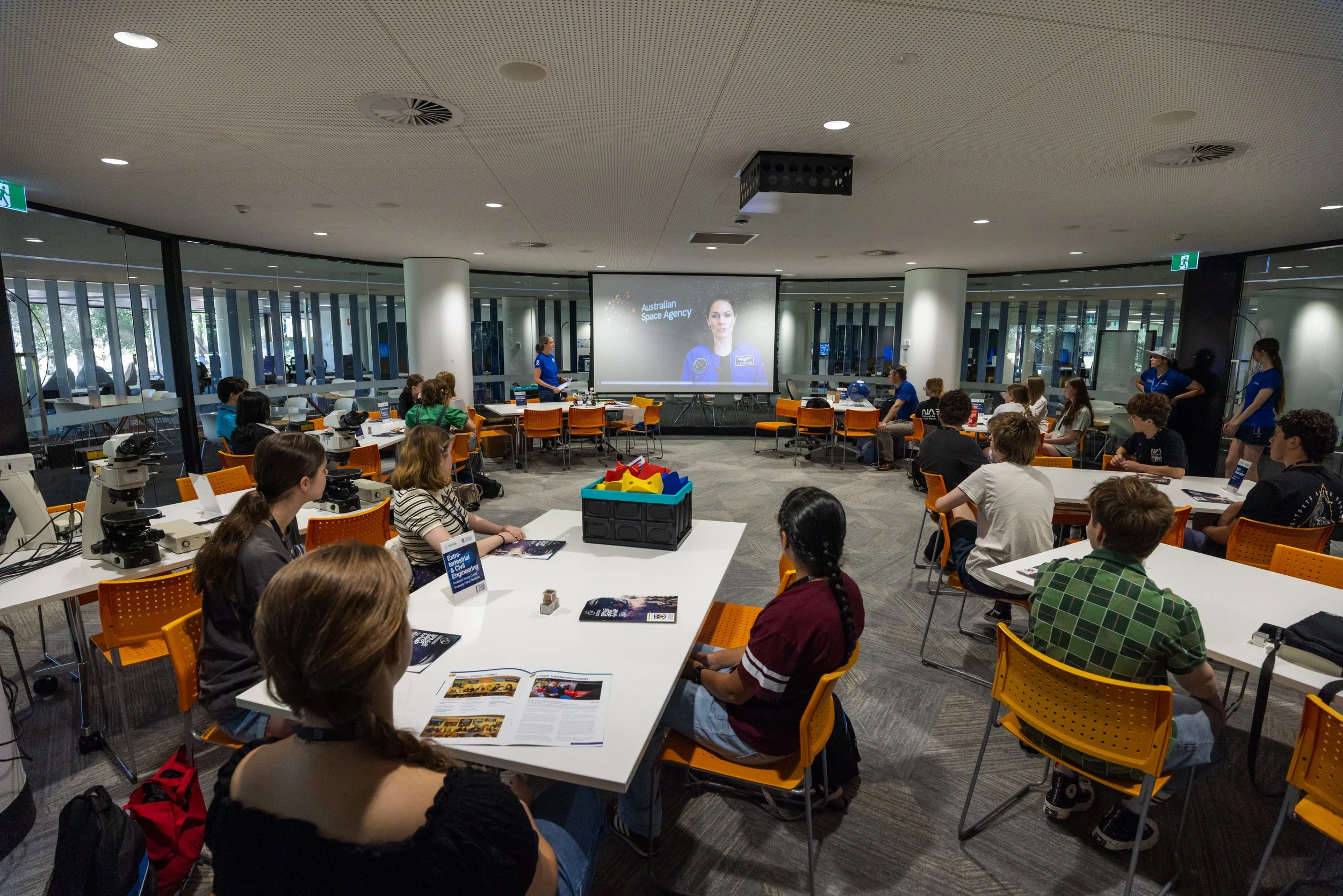
Early education sparks curiosity and engagement at primary and secondary levels
Senior school subject choice increases uptake of mathematics, physics, and engineering pathways
University and training strengthens enrolments in critical disciplines
Workforce retention by reinforcing the value and prestige of STEM careers
In other words, it doesn’t just inspire. It changes decisions, and those decisions compound over time. Shifting just 1% of Australia’s workforce into STEM roles is estimated to add more than $57 billion to GDP over 20 years. A national catalyst that influences even a fraction of that shift delivers extraordinary return.
For context: the cost of enabling this mission is comparable to investing in two Olympic gold medals.
But the return is not a podium moment. Rather it is a generation of engineers, scientists, founders, and innovators. If we want more Australian-built technology, stronger sovereign capability, and a workforce equipped for the industries of the future, we must act now, at the point where the pipeline begins.
A mission for Katherine Bennell-Pegg is the spark. The outcome is a stronger, more capable, more innovative Australia.